
Recording payments & deposits
Payments as rows: recording, voiding, deposits set by hand, and refunding an overpayment.
User guide
Payments as rows: recording, voiding, deposits set by hand, and refunding an overpayment.
An order keeps its money as a list of payments, one row per payment, each with its method, reference and who recorded it. Rows are never edited or deleted. What the order has been paid, what remains and its payment status are all read from that list.
Who can do this: recording a payment needs Record payments (Admin, Store Admin, Cashier). Voiding a payment needs Void payments (Admin and Store Admin only). Refunding an overpayment needs Process refunds (Admin, Store Admin, Cashier). Setting a deposit by hand needs the order update permission.
An order's record page carries a Payments section: Paid so far, Remaining and the Total, then one row per payment showing its method, reference, when it was received and who recorded it. A voided payment stays in the list beside the reversal that undid it, with the reason. The in-app explainer, How money works, is linked from the same section.
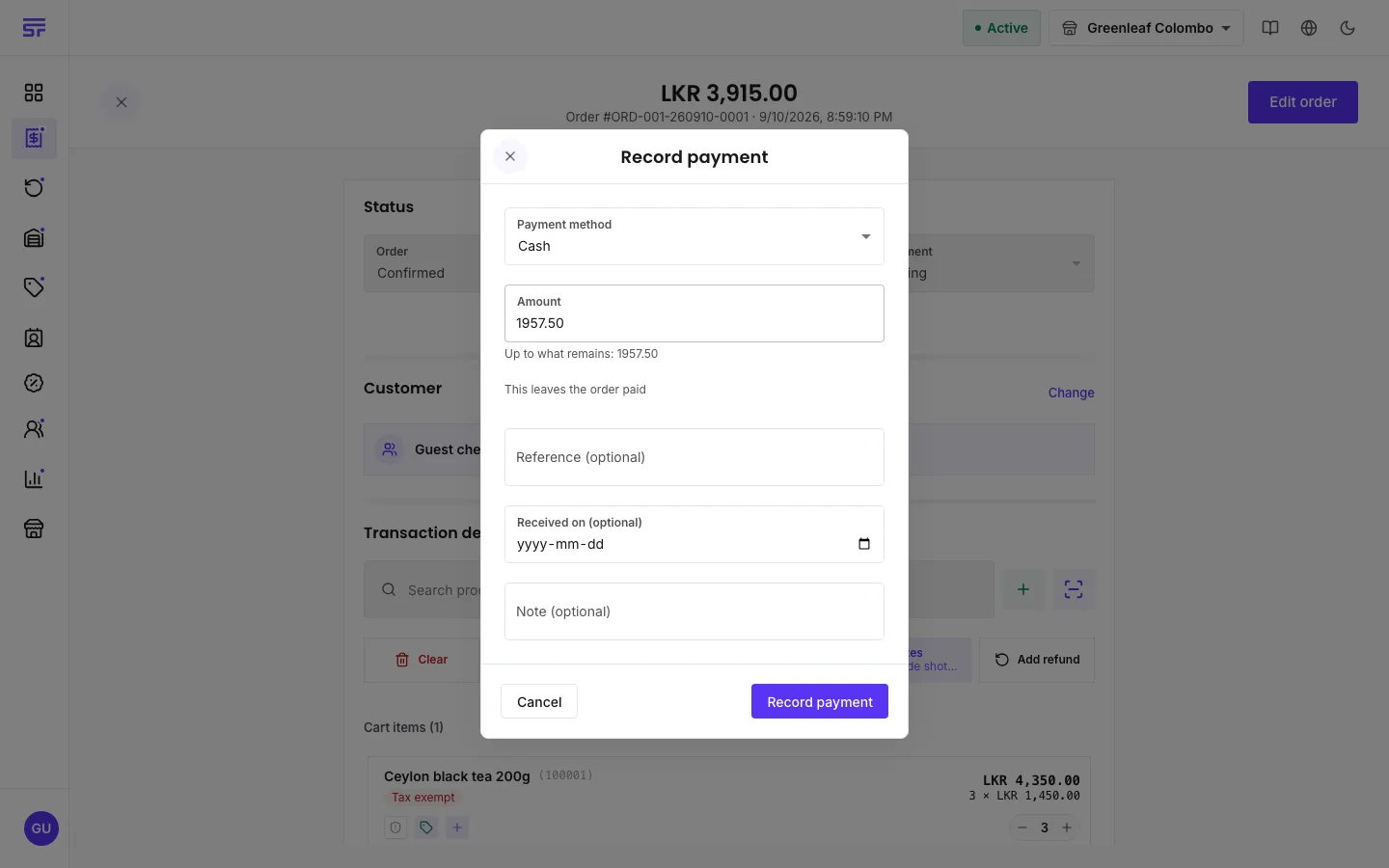
Payments are taken once an order is confirmed (or processing) and while money remains. Press Record payment, or pick Paid or Partially paid from the payment status menu:
Before you save, the dialog tells you where the order will land — "This leaves the order paid" or "This leaves the order partially paid". The payment that covers the total makes the order Paid and mints its tax invoice.
A pre-order or customized product can ask for a deposit up front. The order works out the figure from its lines — the rule — and shows it as Deposit due now at checkout, on the pro-forma invoice, and in the record page's Commitment section. The deposit is not a second price: the total is unchanged, and the deposit is simply the first payment, recorded like any other and marked as the deposit.
Sometimes the rule is not what you agreed with the customer — a regular who pays nothing up front, or a large order where you want more. You can decide the figure yourself:
What you enter is kept beside the rule, never in its place:
A deposit can be set by hand while the order is pending or confirmed; once it is processing, what was asked up front has been asked. Customers ordering online cannot change it.
A payment recorded by mistake is voided, not deleted: a reversal row is added, both rows stay visible, and the reason is kept. Voiding is possible while the order is open — once it is completed, money moves through returns and refunds instead.
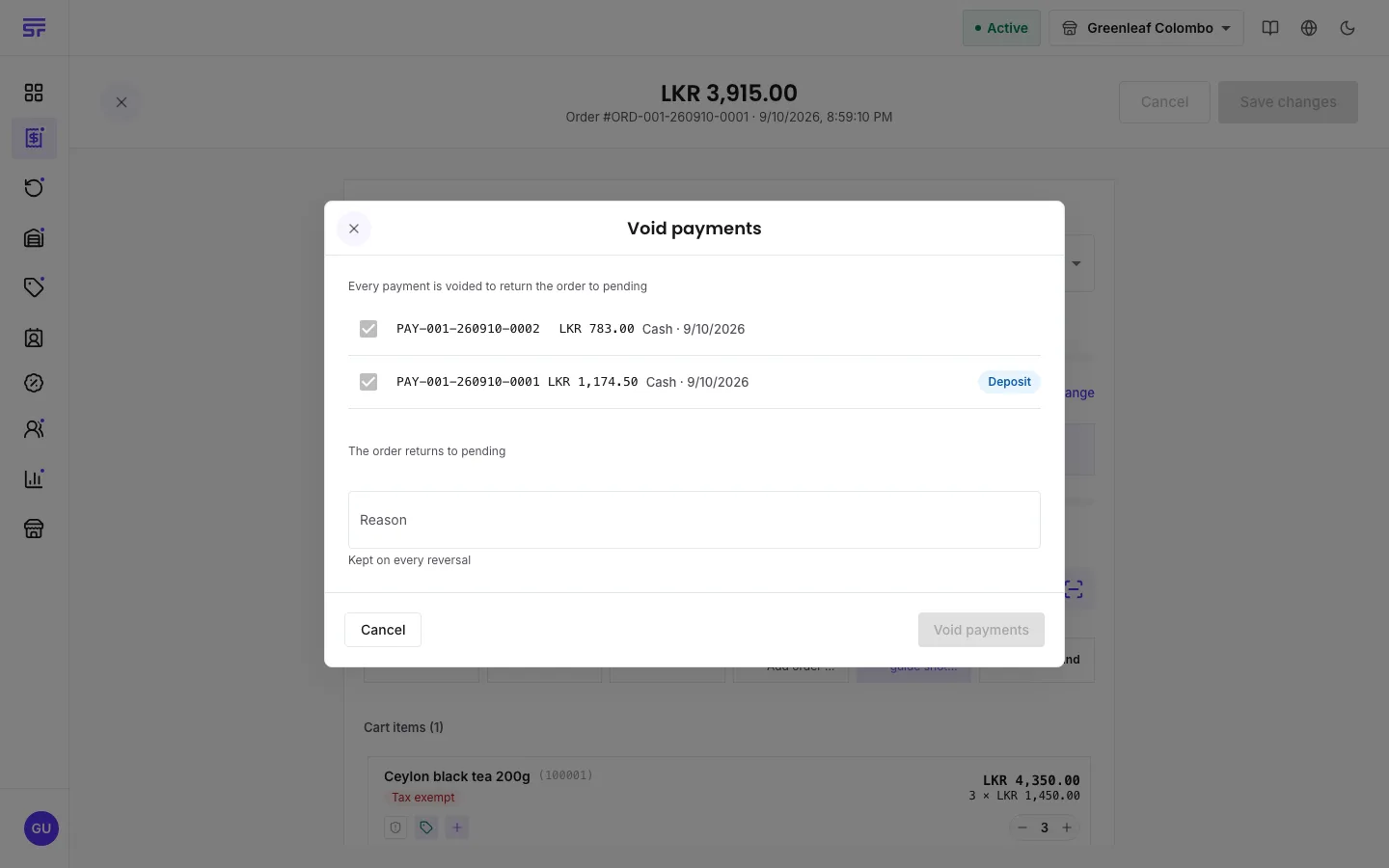
On an order paid before payments were kept as rows, the dialog shows one row marked Recorded before the ledger; it can be voided as a whole, not in parts.
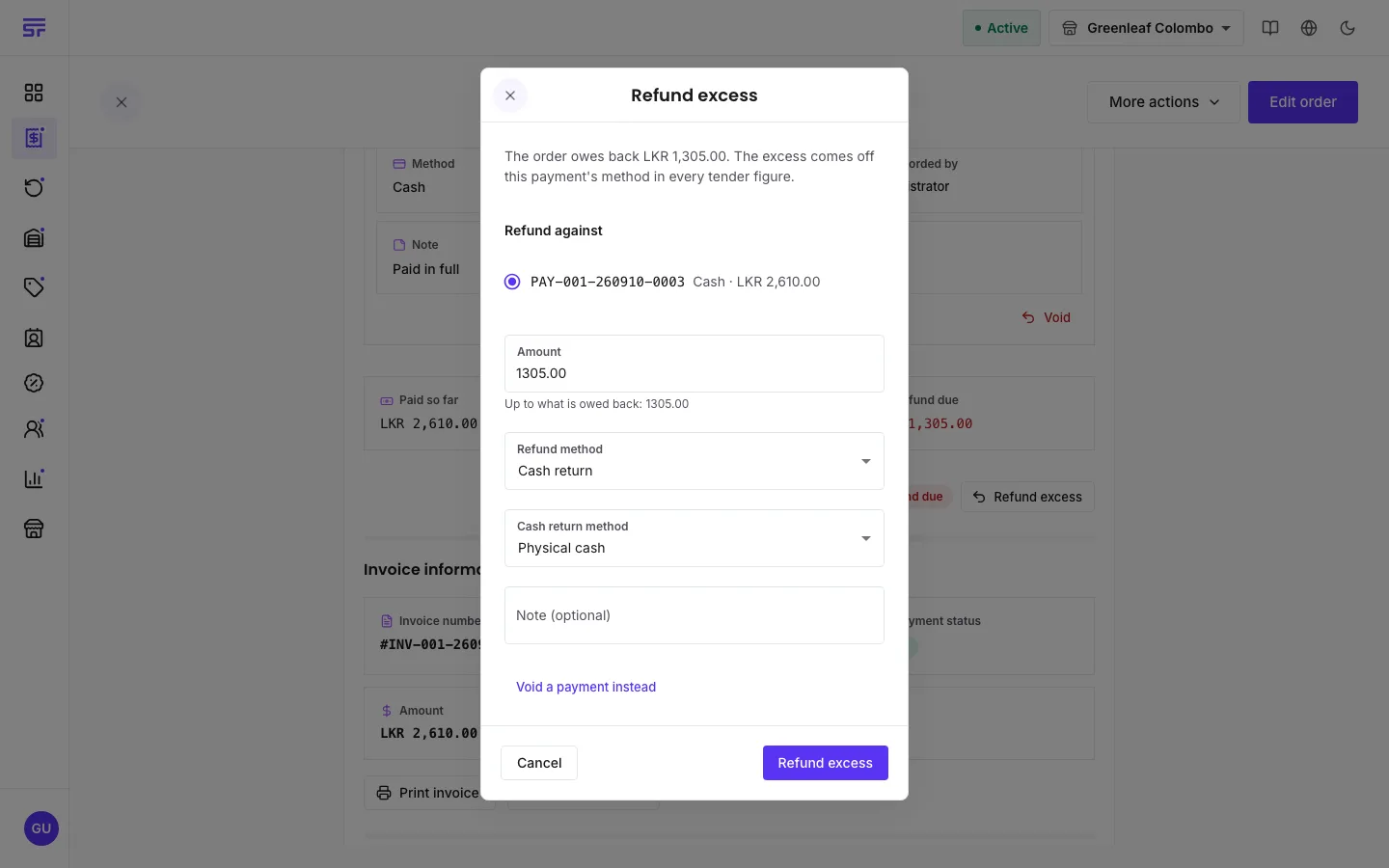
If an edit lowers an order's total below what has already been paid, the order owes money back. It shows a Refund due pill with the figure, and it cannot be completed until that is settled: "cannot complete order while … is owed back — void a payment or refund the excess first." Two remedies:
Void a payment that should never have been taken, as above.
Refund the excess. Press Refund excess beside the pill. The dialog states what the order owes back and asks:
The refund is issued straight away, appears in the order's Payments section as a Refund row, and the order can complete.
Payment status · How invoices work · Editing & cancelling orders