
Dine-in & tables
Table management for dine-in orders.
Available on Solo and above
User guide
Table management for dine-in orders.
Dine-in turns orders into table service: parties are seated at tables, orders carry their table, and the table frees itself when the meal is settled.
Who can do this: creating and deleting tables is the manager's job; a Cashier seats and moves parties — deliberately, since re-seating is till work.
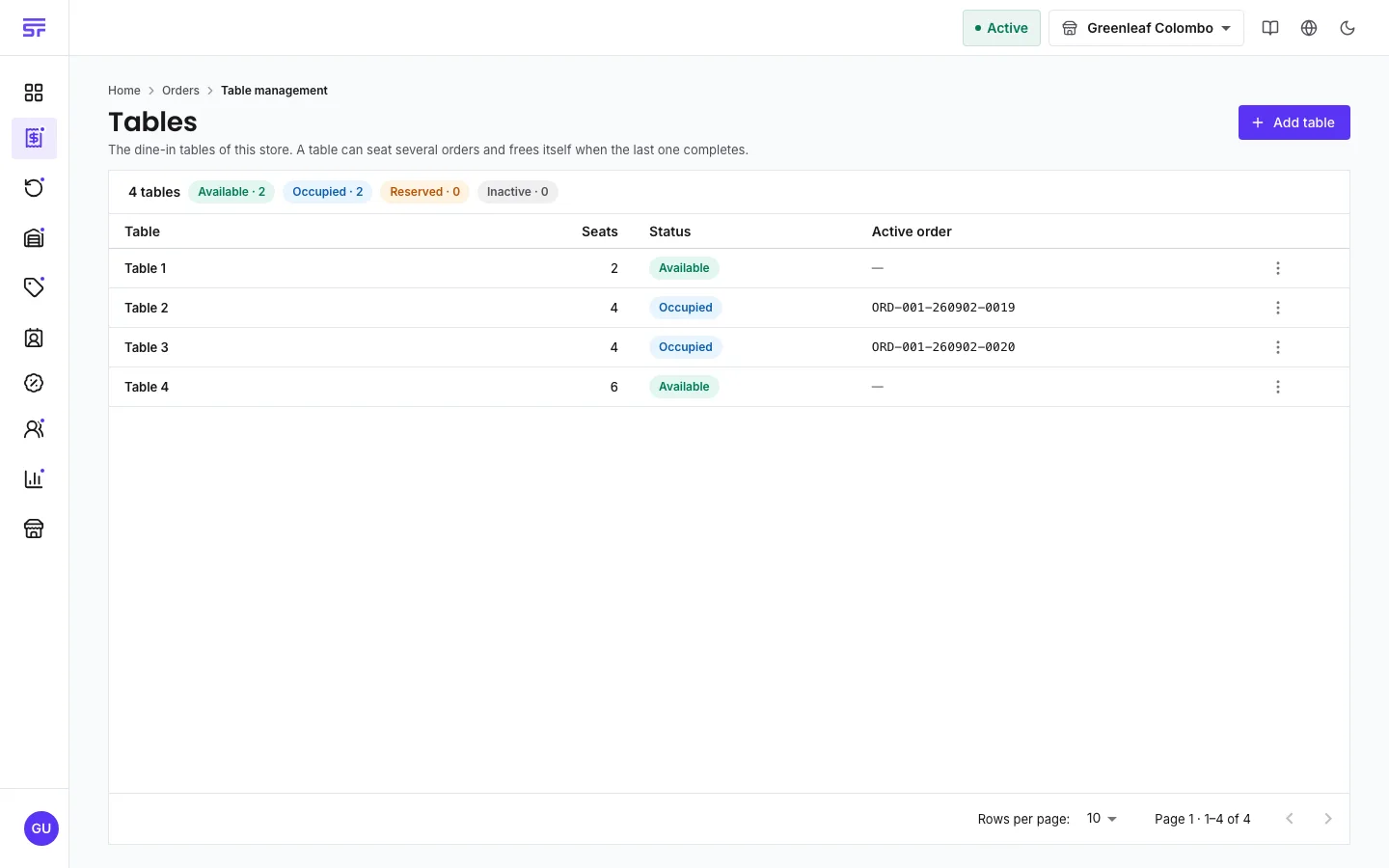
Orders → Tables is the store's furniture: each table has a name and a seat count, and its status follows the orders sitting at it. As the page says: "A table can seat several orders and frees itself when the last one completes." — a party of two couples splitting the bill is two orders on one table.
A dine-in order takes its table at creation, or later from the order (or its board card) — Assign table / Change table. Moving a party mid-meal is fine and doesn't touch the order's contents: seating is operations, not a change to what was sold — which is why a table can still be changed even after the order itself is locked to edits.
Dine-in's fulfilment has the extra step the other types lack:
Pending → Processing → Served → Completed
Served is "the food is on the table" — the kitchen is done but the bill isn't. The order completes when the party pays and leaves, and completion is what frees the table (so does cancelling). The dine-in service charge, if the store sets one, was already added at pricing.
Fulfilment status & types · The fulfilment board · Order status