
Refunds
Refund methods and the ceiling a refund can never exceed.
A refund is money going out — each one a record of its own, raised against an approved or completed return, or against an open order that was paid too much. Several partial refunds against one return are fine.
Who can do this: the counter roles create and process refunds; there is no separate approval step beyond the permission itself.
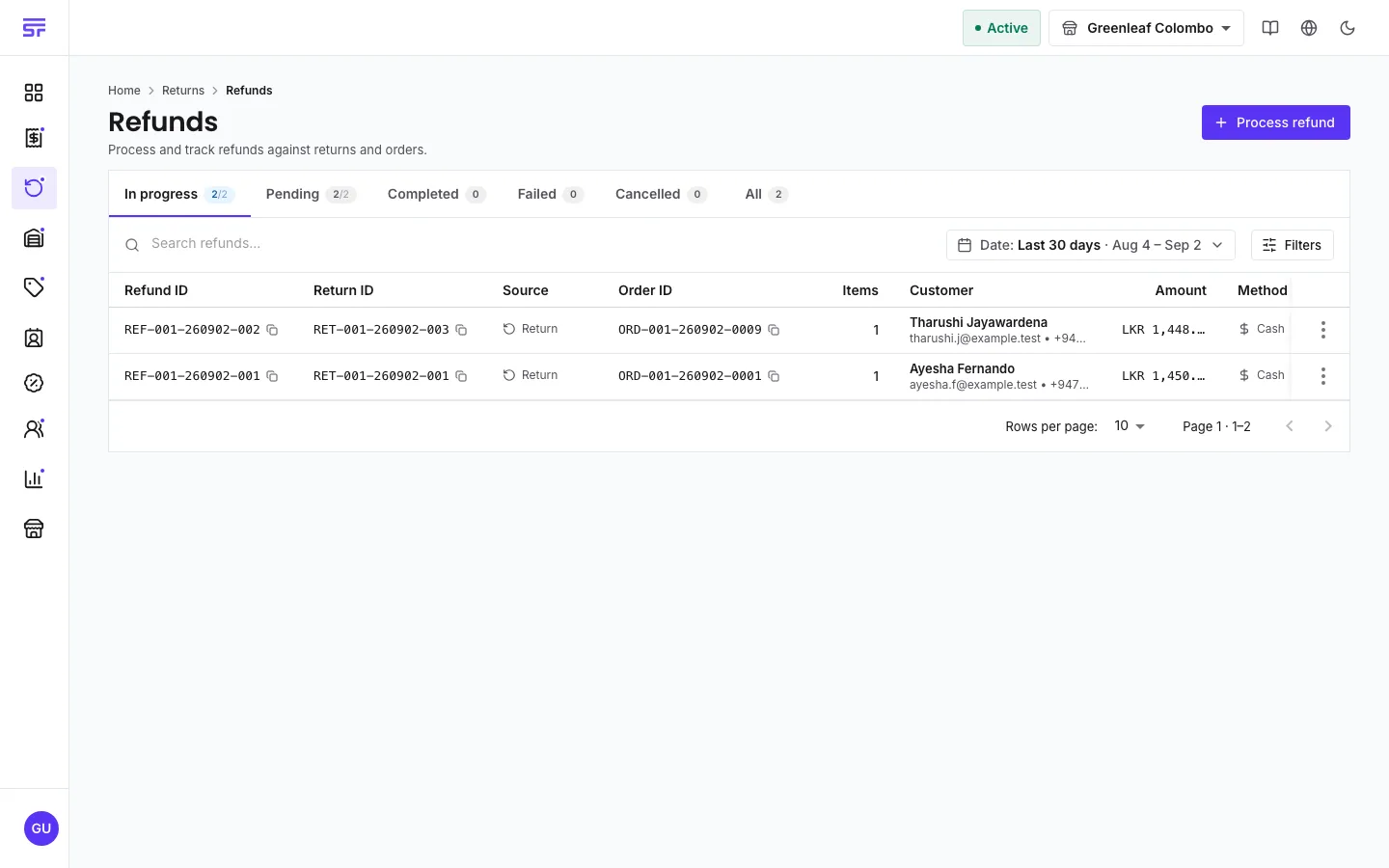
Across every live refund on a return — pending ones included, because that money is already promised — the total can never exceed what the return is worth. The refusal does the arithmetic for you: "refund amount X exceeds the Y still refundable on this return (A of B already allocated)." The rule holds under pressure: two clerks racing to refund the same return cannot both slip under the ceiling, and if the system cannot verify what was already refunded it refuses rather than guessing.
Pending → Processing → Completed, with Failed as the retryable detour and Cancelled as the exit from pending. Two details worth knowing:
Completing a refund updates the parent return's refunded position and, where loyalty is in play, claws back points the refunded purchase had earned.
When an edit lowers an open order's total below what the customer already paid, the order shows Refund due and cannot be completed until the excess goes back. Refund excess on the order's record page raises a refund against the order itself — no return involved:
Its order and its amount are fixed once raised — "an overpayment refund's amount is the excess it was raised for — cancel it and raise another." Full walkthrough: Recording payments & deposits.