
How inventory works
A product is business-wide; its stock lives per store.
The whole inventory system rests on one equation: product + store = stock row. A product is the business-wide catalogue record — name, price, tracking rules. A store's stock of that product is a separate record, created when you link the product to that store. One product sold in three stores means one catalogue entry and three independent stock rows, each with its own quantity, batches and availability.
Who can do this: stock always belongs to one store, so every inventory page requires a real store selected in the top bar — the "All Stores" view can read reports, but stock work happens inside a store.
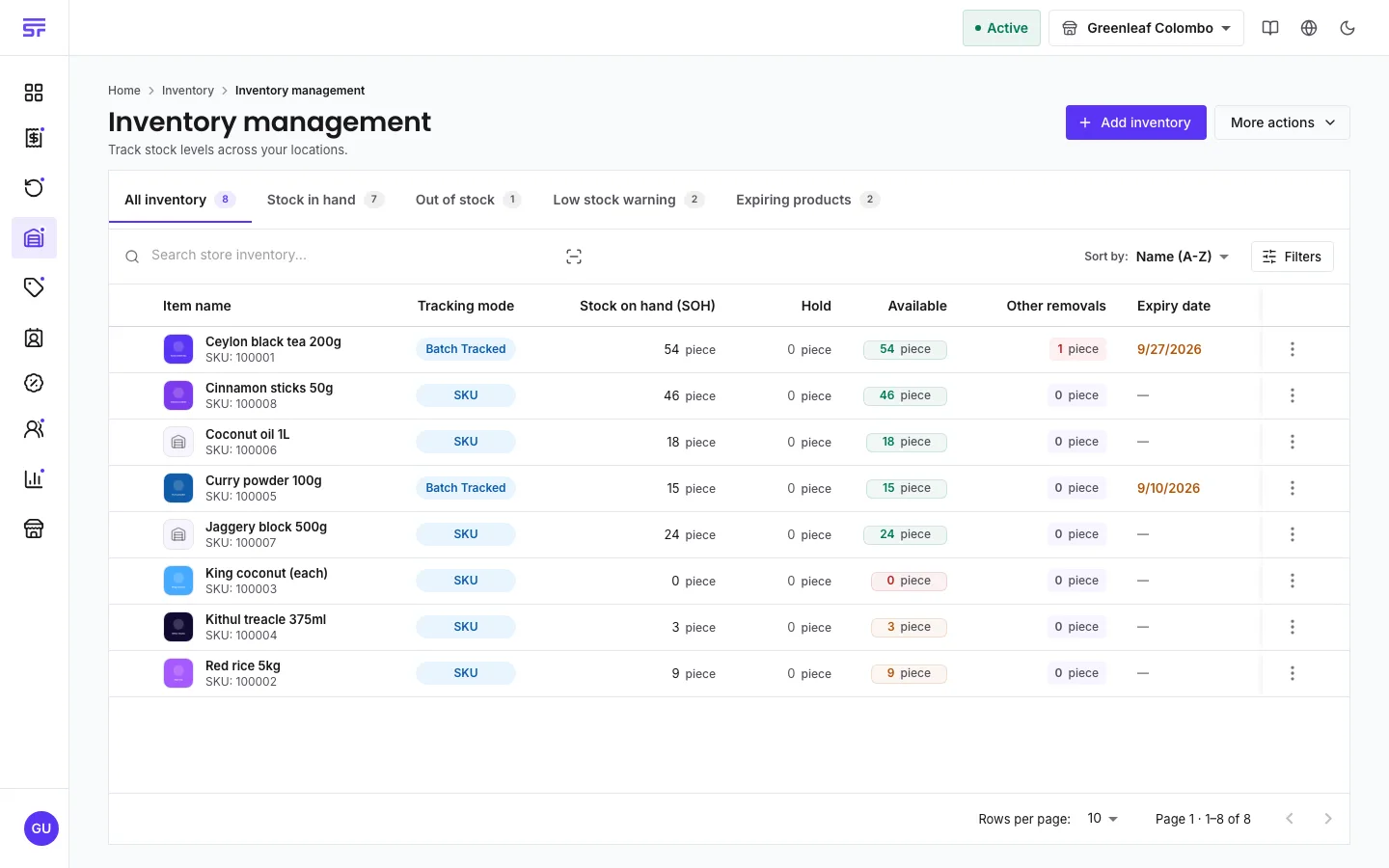
The page states the arithmetic on its own summary tiles, and it is worth internalising — a product can show plenty on hand and still refuse to sell, because held stock is counted but not sellable.
Stock moves for four kinds of reason, and every movement is written to the history ledger:
Editing the product itself — its price, its name — is a catalogue action and touches no store's stock.
Core concepts · Linking products to stores · Adjusting stock